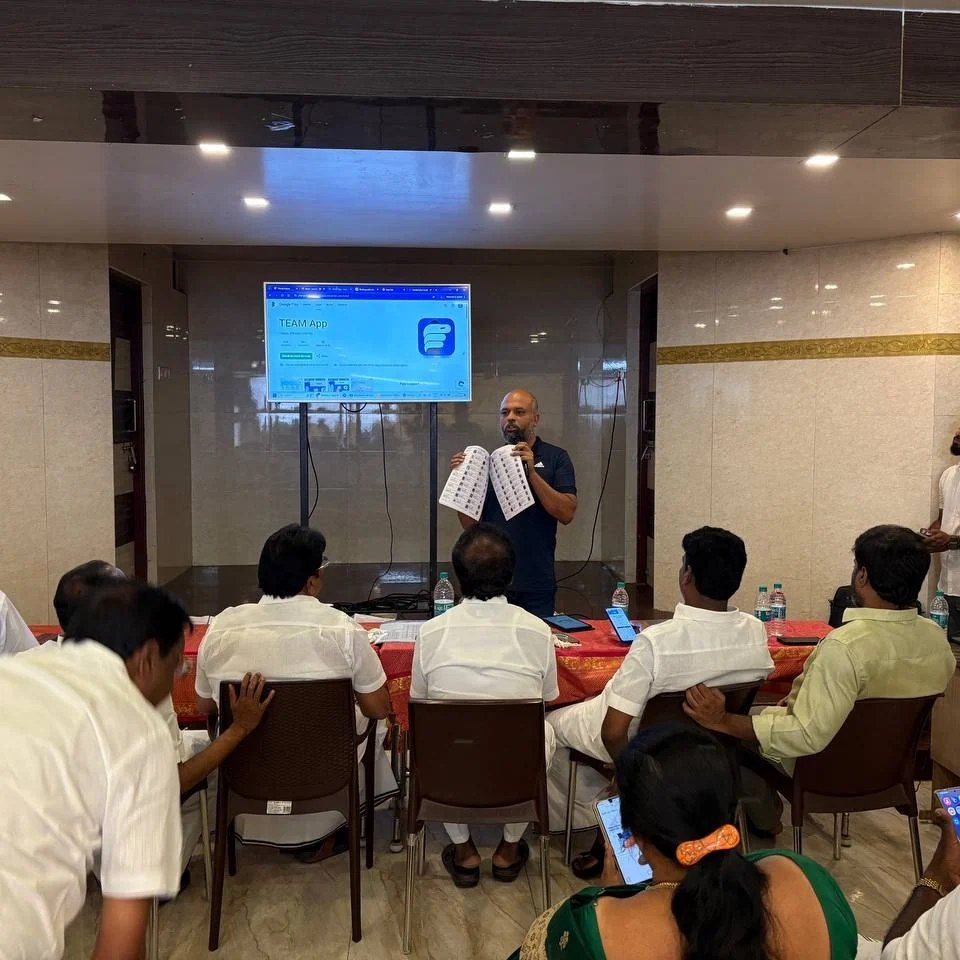
Why Technology in Elections?
Technology helps candidates and political parties coordinate work across an entire constituency. A booth volunteer may know that a meeting venue has changed, a voter list needs checking or a poll-day update is overdue. A shared system helps the right person see that information, act on it and report back.
Why does a campaign need technology?
A campaign runs on local knowledge. The challenge is bringing that knowledge together while there is still time to act. If ten booth coordinators send updates through calls, messages and spreadsheets, someone at the campaign office has to piece together what happened, which report is current and what still needs attention.
Consider a candidate preparing for a ward visit. The local team raised a water supply issue during the previous visit. Before returning, the candidate needs three answers: What did residents report? Who agreed to follow up? What has happened since? A dated record gives the candidate a better starting point for the next conversation.
How does technology help candidates and political parties?
| Who uses it | How it helps |
|---|---|
| Candidate | Reviews a constituency briefing before a visit, including local concerns, previous commitments and pending follow-ups. |
| Political party | Sees which constituency teams have completed an assignment and where additional people or training are needed. |
| Booth coordinator | Assigns fieldwork, records updates and hands unfinished tasks to the next volunteer on duty. |
| War room team | Checks incoming reports, follows up on missing information and briefs the candidate using the latest verified updates. |
Where does it help during a campaign?
Voter list preparation. Booth teams can organise their work by polling part, record which entries they have checked and flag discrepancies for verification against the official electoral roll.
Field surveys and local issues. A common survey format makes reports easier to compare. If several volunteers record the same damaged road, the coordinator can group those reports into one issue, assign a follow-up and record what residents are told on the next visit.
Daily campaign coordination. When a meeting moves to a different venue, sending an announcement is only the first step. The organiser also needs to know whether the transport team, venue coordinator and booth volunteers have received the change. Tracking acknowledgements shows exactly who still needs a call.
How does technology help on poll day?
A poll-day dashboard can bring booth-wise turnout updates, reporting times and field issues into one view. The most useful detail is often the timestamp. A figure received two hours ago needs a different response from one received five minutes ago.
For example, at noon a war room might see these two entries:
| Booth | Latest campaign-reported turnout | What the coordinator does |
|---|---|---|
| Booth 18 | 32%, updated at 11:45 a.m. | Includes the figure and its timestamp in the next briefing. |
| Booth 19 | Update pending | Contacts the designated reporter. A missing report should never appear as 0% turnout. |
Campaign-reported estimates should be clearly distinguished from official turnout figures. That distinction helps the team understand what it knows and what still needs verification.
← Back to all articles